Drupal upgrade services

Upgrade to Drupal 11 for improved performance, security, long-term savings and an easy-to-use editorial experience. 
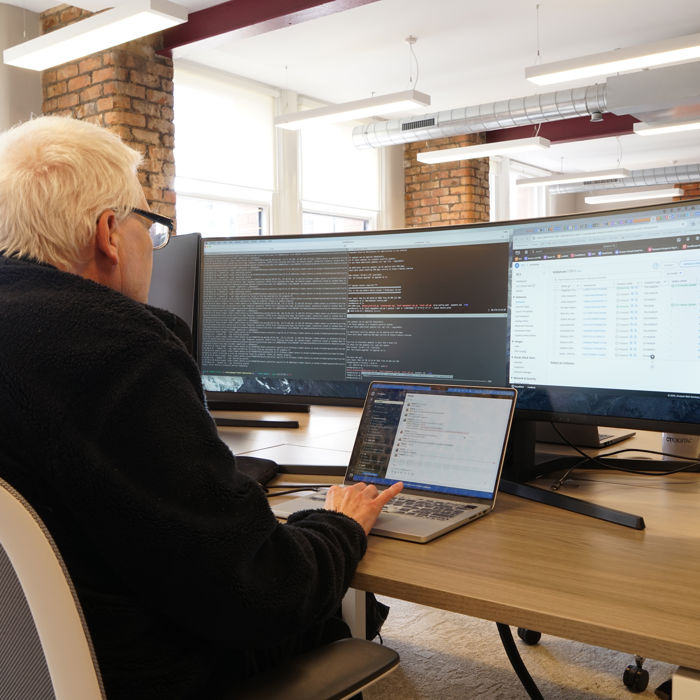
More than 20 years of Drupal experience

At CTI, we’ve developed business cases and managed Drupal upgrades for universities, the public sector, membership bodies, professional services, not-for-profits, travel & leisure brands and beyond. Talk to our team of Drupal experts about your upgrade project.

Why upgrade?

A lot has changed online during the lifespan of older, unsupported Drupal versions. Drupal 7, for example, launched back in 2011, reaching end of life in January 2025. In that time, the mobile web, more powerful devices, greater automation, tech integration, new privacy regulations, and accessibility standards have all changed enterprise software and consumer expectations.

Newer versions of CMS platforms, including Drupal, must therefore be built for the modern web. And businesses must upgrade in order to keep their platforms secure, but also to be able to innovate.

The benefits of Drupal 11

Drupal 11, which launched in August 2024, introduced a range of new features.
  • Security enhancements mitigate risk

    Stronger data encryption protocols and advanced access controls help to protect your data, by preventing breaches and managing user permissions.

  • Improved UX lets marketers learn quickly

    A more intuitive admin interface and better media management make learning the platform easier and allow for modern content creation powered by rich media.

  • AI integration supercharges content and dev teams

    From improved content tools (such as summarisation, in-line assistance, translation, moderation and tonal adjustment), to semantic search and agentic modules that allow developers to build with natural language.

  • Enhanced performance reduces customer churn

    Optimised caching improves site speed, vital for conversion and search ranking. More efficient management of system resources also helps to keep sites performing in peak times.

  • API support allows seamless integration

    Integrate Drupal 11 with your martech stack, from CRM to analytics.

  • Upgraded SEO management aids brand visibility

    Schema markup integration and enhanced meta tag management are table stakes for any search marketer.

Drupal upgrade client case studies

De Vere

Enhanced digital experience with successful Drupal upgrade

How we approach Drupal upgrades

The effort required to upgrade a major Drupal version can vary depending on the size and nature of your site, how well maintained it is, and whether it adheres to Drupal’s best practices. In order to determine the work involved and next steps, we’ll start with an audit before moving on to a test plan.

Step 1. Audit

  • Infrastructure and tooling

    Later versions of Drupal often require more up-to-date versions of PHP, MySQL, Drush and Solr before (or as part of) a core upgrade.

  • Unused modules

    Is there code, custom or contribution modules currently in the codebase that are no longer in use? Removing these will reduce the amount of modules that need to be upgraded.

  • Contribution module versions

    Drupal contribution modules release new versions to support later versions of Drupal. We’ll assess if the ones you currently use are compatible, or if newer ones need to be created.

  • Custom code

    Code that has been written specifically for your site's functionality will be reviewed for compatibility with both the updated Drupal version and the underlying infrastructure.

Step 2. Test plan

It’s important that your Drupal site continues to look and function in the same way after the upgrade as it did before. If a test plan already exists, we’ll review it to make sure it’s still up to date. If one doesn’t exist we’ll create one. We’ll also consider how much of the testing should be manual vs automated - and what will be the right level of investment into testing now and in the future.

Step 3. Planning & implementation

We’ll use the outputs of the audit to create a technical delivery plan, splitting the work into tickets, and highlighting any technical complexity. Our Drupal developers work through those tickets - updating contribution modules and custom code, removing unused modules, preparing infrastructure changes ahead of the release.

Step 4. Testing

We’ll release the upgraded Drupal version to a testing environment, where our QA team will execute the testing plan, and produce any automated tests that were agreed. If there are any regressions found, our team of developers will work on fixes which will be re-tested before a stable version is prepared for User Acceptance Testing. User Acceptance Testing allows you as the customer to review the work prior to the go-live release.

Step 5. Release

Once all bugs have been addressed, we’ll prepare a release for the live environment, including preparation for upgrading underlying infrastructure such as PHP and MySQL. When all parties have agreed things are ready, the work will be deployed on an agreed time and date.

Drupal upgrade FAQs

<p>As a very first thing, we’d like to know what version of Drupal you’re on - from this we could give you an initial overview of the steps we’d take next, and what kind of activities would be involved.</p> <p>Other useful information would include:</p> <ul> <li>Is the site a multi-site?</li> <li>Where is it hosted?</li> <li>What versions of PHP, MySQL and Solr are you using?</li> <li>Do you know how many modules (custom and contrib) you are using?</li> <li>Would you say the site has been well maintained since it was built? </li> </ul> <p>This information would help us in providing an initial rough estimate, before we run a more detailed audit with access to a copy of the code and a working (sanitised) database.</p> <p> </p>
<p>The steps between major versions are typically the same, but if you wanted to go from 9 -&gt; 10, then 10 -&gt; 11, that would be two different activities.</p>
<p>Major versions are released every two years, minor versions every six months, and patch versions monthly.</p> <p>Support for Drupal 7 ended on January 5, 2025. As of the end of December 2025, there were still <a href="https://www.drupal.org/project/usage/drupal">over 200,000 projects on Drupal 7</a>. Best practice advises against using unsupported software such as Drupal 7.</p> <p>Drupal 12 will be released in 2026, somewhere between June and December, depending on when beta requirements are completed.</p> <p>Drupal 10 will reach end of life on December 9, 2026, after the release data for Drupal 12. Read more about the <a href="https://www.drupal.org/about/core/policies/core-release-cycles/schedule">release cycles</a> and the <a href="https://www.drupal.org/about/core/policies/core-release-cycles/release-process-overview">release process</a> on the Drupal website.</p>
<p>Drupal is a framework, and it is very flexible, so it can flex and adapt quite quickly to different trends and market changes. It’s well positioned for the age of AI, as it is underpinned by its strong content modelling, its flexible Role Based Access Controls, and how it can expose data through API’s or its Model Context Protocol.</p>

Talk to our Drupal experts about your next upgrade